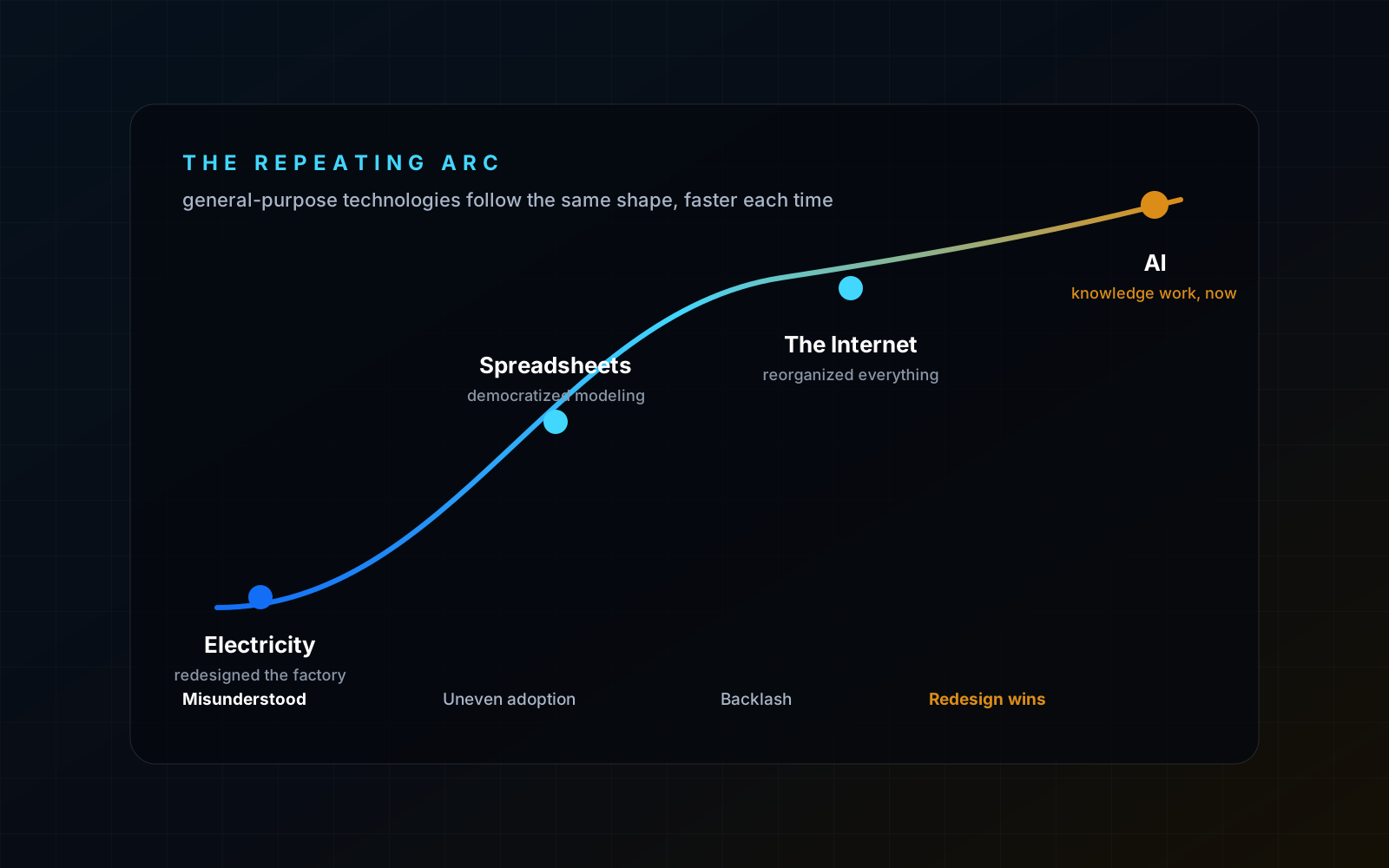
Installation rarely captures the value
Early electrification often replaced a central steam engine with an electric motor while preserving the same factory layout. Spreadsheets first reproduced paper ledgers. Early websites reproduced brochures. In each case, visible value accelerated after workflows, roles, and control points changed around the technology.
The analogy is useful as a diagnostic, not as a prophecy. It does not prove that AI will follow the same adoption curve or produce the same labor effects. It offers a question that can be answered this quarter: has the organization redesigned the work, or only inserted a new tool into the old sequence? Seat count will not answer it.
AI changes the verification ratio
Generative systems can produce code, analysis, decisions, and communication at a speed that exceeds the rate at which a person can inspect each item. The bottleneck can move from production to acceptance. A workflow that scales generation without scaling evidence creates a larger queue of plausible but unverified work.
This is where the historical pattern bends. A spreadsheet generally exposes its formulas. An agent can choose tools, transform evidence, and summarize the result in one opaque turn. Rewiring work therefore requires new roles and sequences, and also new provenance and verification contracts. Otherwise generation has been accelerated and the gauges have been removed.
Three questions for a transition plan
First, which decision or handoff changes rather than merely becoming faster? Second, what evidence will allow the next actor to evaluate the output? Third, which failures must stop the workflow rather than degrade gracefully?
These questions turn a technology program into an operating-model program. They also reveal where AI is unnecessary. A deterministic rule, a database constraint, or a conventional workflow may be cheaper when the task is stable and the acceptance condition is exact. The fact that an agent could be used is not a reason to use one.
Measure the redesigned work
Adoption metrics such as seats, prompts, and model calls describe tool use. Better measures track cycle time, rework, exception rate, evidence coverage, and the share of decisions that can be reproduced. Those outcomes show whether the work changed and whether the new form is trustworthy.
The historical lesson is modest: complementary organizational change often matters more than early tool performance. The AI-specific addition is equally modest and easier to ignore. Complementary verification capacity must grow with generation capacity, or the organization will accumulate fluent drafts faster than it can accept them.