Generation lowers one barrier and raises another
AI can help non-specialists sketch interfaces, queries, automations, and decision flows. That access is valuable, but it does not remove the need to define data ownership, permissions, failure behavior, and lifecycle. It increases the number of proposed changes that need those definitions.
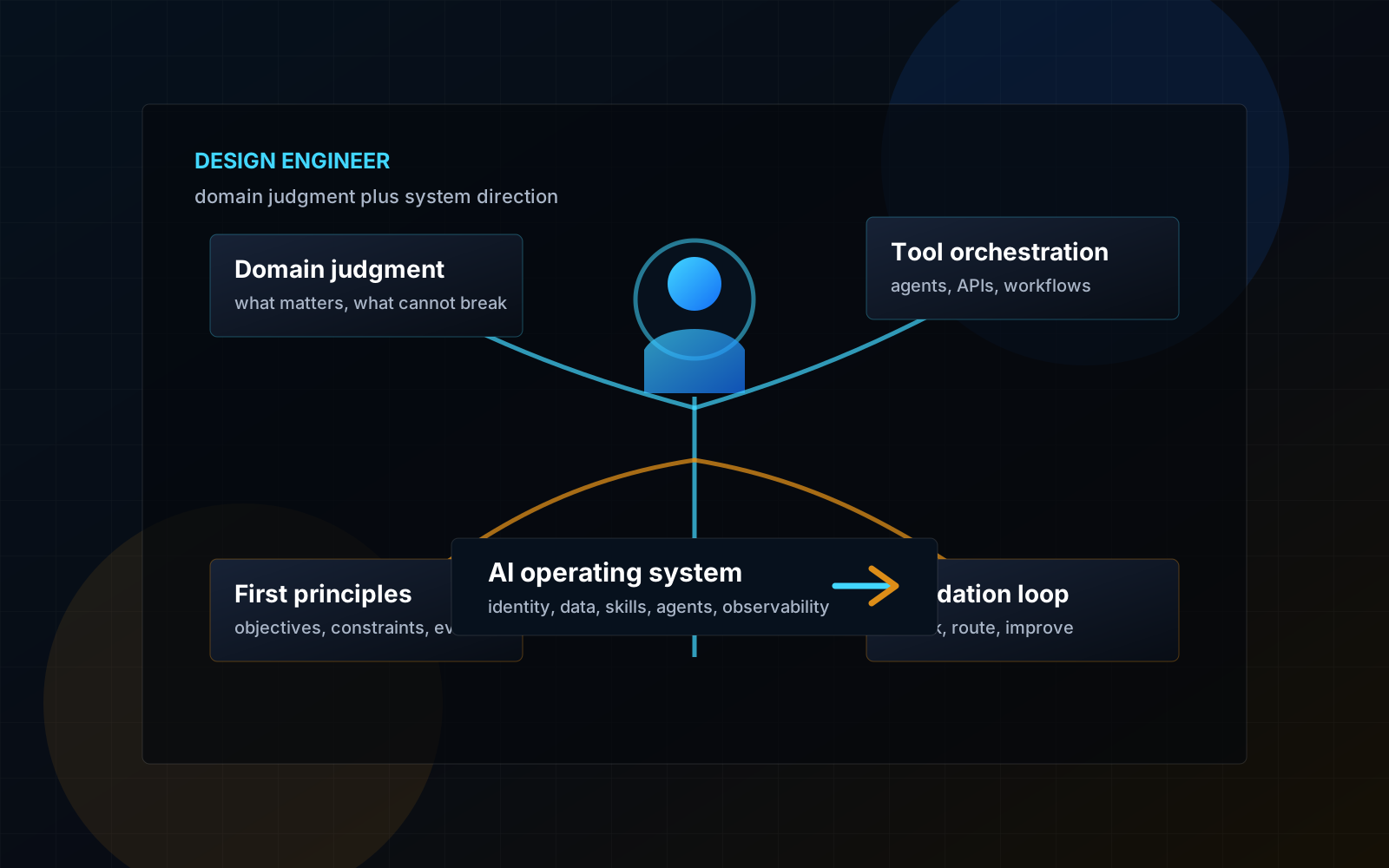
The resulting skill is broader than visual design and narrower than full-stack engineering. It is the ability to translate intent into contracts another system can evaluate. Generating a dashboard is easy. Deciding that a chart may render, that a control may not change labor, and that a number must carry its query is the work.
Registries turn proposals into governed components
A component registry can define the approved artifact types, required fields, data sources, renderers, and actions. An agent may propose a chart or table, but the registry determines whether the proposal is valid and what authority its controls receive.
This preserves a creative surface without allowing generated code to become the policy layer. New capability enters through a typed extension point rather than an arbitrary executable fragment. If the agent can emit a button that posts to production, the builder is also a hole.
Leaders need to review seams
As implementation becomes cheaper, review should focus more heavily on the boundaries between generated work and durable systems: which data is trusted, which action is reversible, who approves promotion, and which evidence survives the conversation.
These questions are accessible to domain experts because they concern operating intent. Engineering still owns implementation quality and security, but product and operations leaders can define stronger contracts than a generic prompt can infer. They will also live with the side effects.
A bounded participation model
Give contributors a catalog of approved building blocks, a way to propose compositions, a preview surface, and explicit promotion rules. Record the proposal separately from the accepted artifact.
The model avoids the false choice between centralized development and unrestricted generation. Participation can expand while execution authority remains explicit. The organization gets more drafts. It does not have to give every draft a write path.