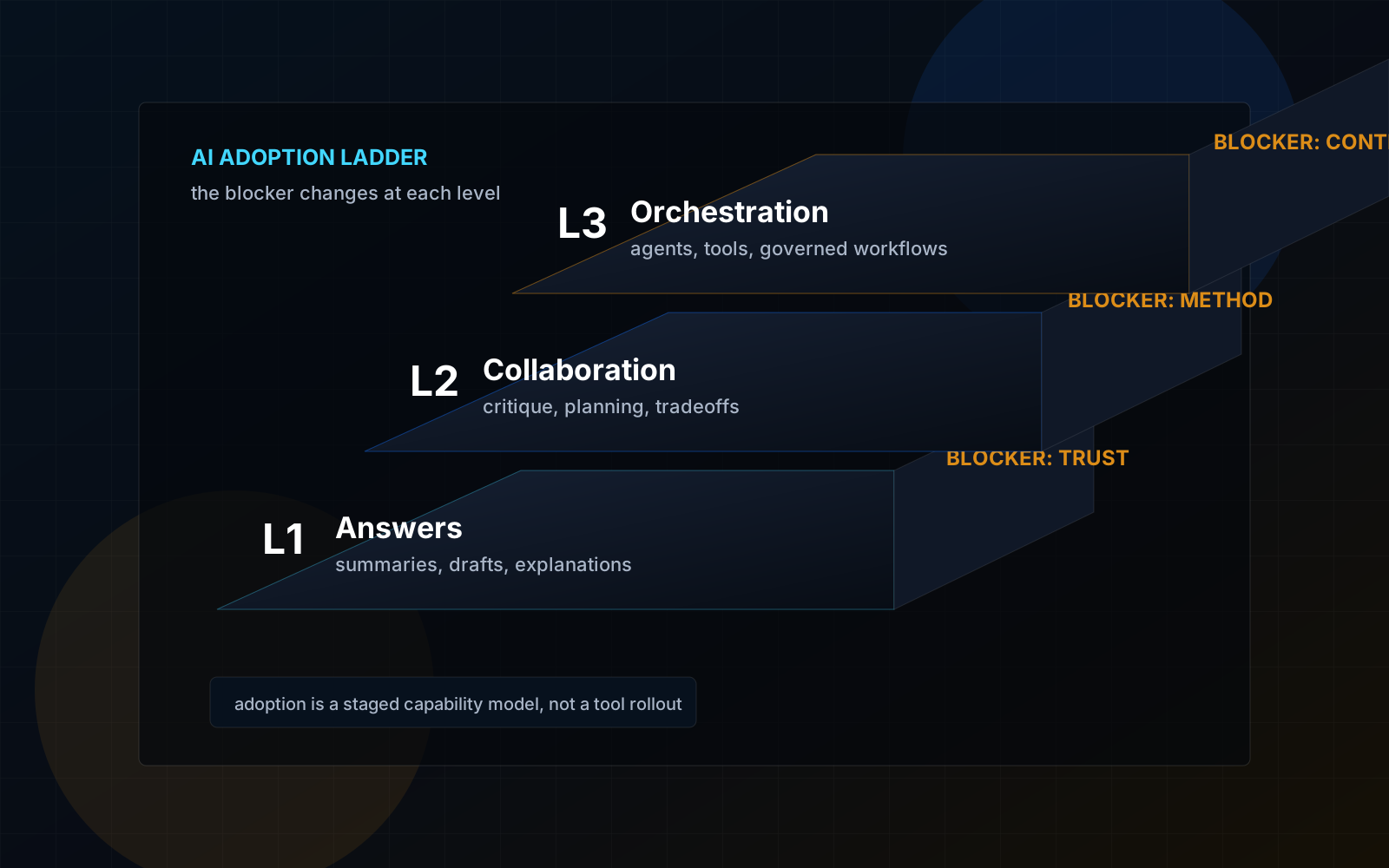
Level one: answers
The first level uses AI to draft, summarize, search, or explain while a person remains the decision-maker and executor. The main risks are source quality, privacy, and overconfidence. Literacy and citation practice provide much of the needed control.
Success is not prompt volume. It is reduced time on a defined task without an increase in consequential errors. Low-stakes work can remain at this level indefinitely and still create value. Calling that immature is how programs overbuild.
Level two: collaboration inside a workflow
At the second level, the system uses tools, structured data, and process context to participate in a recurring job. It may prepare an analysis, update a draft artifact, or propose an action. The main blocker shifts from model literacy to integration and shared definitions.
Controls now include tool permissions, semantic contracts, artifact schemas, and human review at meaningful handoffs. A fluent answer is insufficient because the output must fit the next stage of work. This is where many programs stall: the model is adequate, and the workflow is not.
Level three: bounded orchestration
At the third level, the system may initiate or complete work within a declared authority envelope. The blocker becomes governance: budgets, identity, evidence, escalation, revocation, and independently verified completion.
The system should be able to refuse a task whose manifest, permissions, or evidence requirements cannot be satisfied. An agent that always tries to help is not ready to hold operational authority. Helpfulness without refusal is how silent side effects enter a process.
Do not force every job upward
Higher levels are not inherently better. They cost more to integrate, govern, and observe. A task with high ambiguity or high consequence may remain human-led even when adjacent work becomes orchestrated.
The useful planning question is not how advanced the organization is. It is which recurring job has enough context, stable authority, and testable evidence to move one level. Answer that per job, and you will stop buying a platform for a summarization problem.