One harness is not a durable standard
Coding-agent interfaces change quickly, and different teams prefer different interaction models. Standardizing one client can reduce short-term variation while coupling governance to a tool the organization does not control. Six months later the mandated client is often the one half the company has already left.
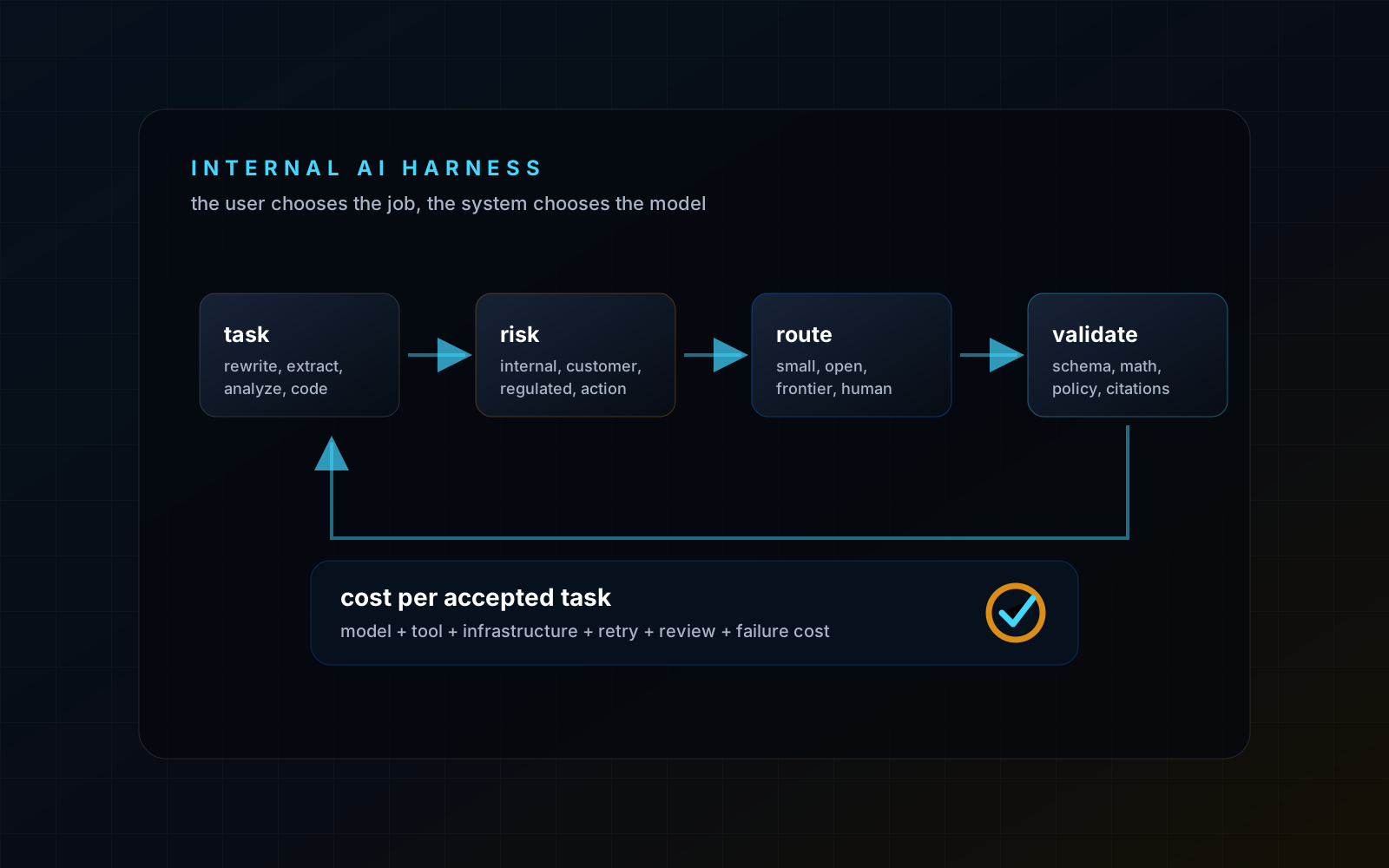
The more durable boundary is a shared substrate: identity, traces, task contracts, acceptance tests, budgets, artifact digests, and completion receipts. Harnesses may propose work against that substrate, but they cannot redefine its evidence.
The substrate owns the hard stops
A budget stored only in a harness prompt is advisory. A test run only by the worker is self-attested. A tool restriction implemented only in one client disappears when another client enters. Hard constraints must be checked where dispatch, tool admission, and completion are authorized.
This arrangement permits local experimentation without turning every preference into an enterprise exception. A harness can change its planning style or user experience while still emitting the same task identity, evidence, and cost records. The receipt is what gets standardized, not the editor.
Portability is proven by a handoff
A useful portability test starts a bounded work item in one harness, transfers it to another, and requires the second to continue from durable state without copying a private conversation. The acceptance test and ownership scopes remain unchanged.
If handoff requires a transcript dump or loses the evidence trail, the work still belongs to the original harness. Shared state should consist of contracts and receipts, not conversational memory. Exporting the chat is an admission that the work never left the client.
Pluralism has a cost
Multiple harnesses increase integration testing, support burden, and the chance that one client interprets a contract differently. The strategy is justified only when the shared substrate is strict enough to make those differences observable.
The minimum contract is compact: one work identity, one ownership envelope, one acceptance authority, one budget ledger, and one artifact digest. Without those primitives, harness pluralism becomes policy pluralism, and the next year is spent arguing about which agent's completion report counts.