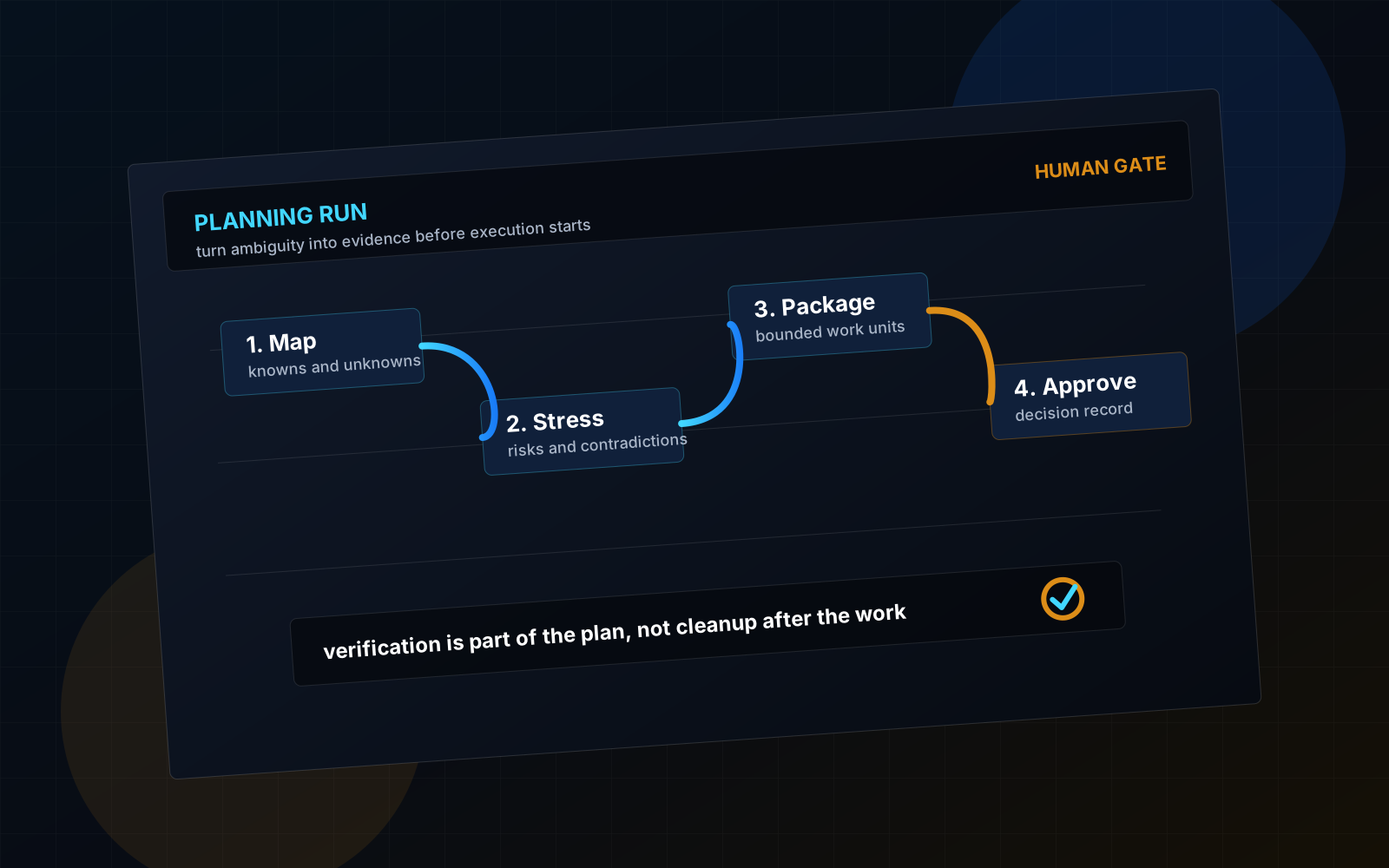
Use the model to surface disagreement
A planning model can trace code paths, compare interfaces, enumerate failure modes, and challenge ambiguous requirements. It should not quietly choose among materially different product outcomes. Those choices remain visible decisions with named owners.
The best planning questions are adversarial: which existing system would this duplicate, what evidence would disprove the proposed architecture, which field names are assumed rather than observed, and what could pass the test while violating the intent? If the plan never disagrees with you, it is taking dictation.
Write contracts at the seams
A plan should specify function signatures, payloads, ownership, state transitions, and error behavior wherever two work packages meet. Vague prose is acceptable for motivation. It is expensive at an integration boundary, where two implementers will invent two field names and a week of reconciliation.
The standard is builder independence. A capable implementer should not need to reopen the architecture question or invent a field name. If exploration is still required, the plan is not finished, or the uncertainty should be an explicit investigation package rather than a hope hidden in a paragraph.
Design verification before implementation
Acceptance criteria should map to commands, visible states, persisted records, or other observable evidence. The baseline should fail before the feature exists, and regression checks should already pass. This proves the test can detect the intended change rather than merely compiling.
Mutation testing strengthens the contract. Remove the integration hook, bypass the permission check, or alter the artifact after verification. If the harness stays green, it is measuring construction rather than behavior, and you will ship a feature the tests cannot see.
Keep the plan smaller than the investigation
A specification should carry decisions, not every investigation transcript. Raw evidence can remain in linked reports while the plan records the constraint it established. Later builders should not have to pay to reread dead context, and neither should the next planning model.
The finished plan is not a prediction that nothing will change. It is a record of current intent, verified facts, open risks, and the rules for recognizing drift. If it cannot tell you what would count as a change of mind, the plan is still unfinished.